
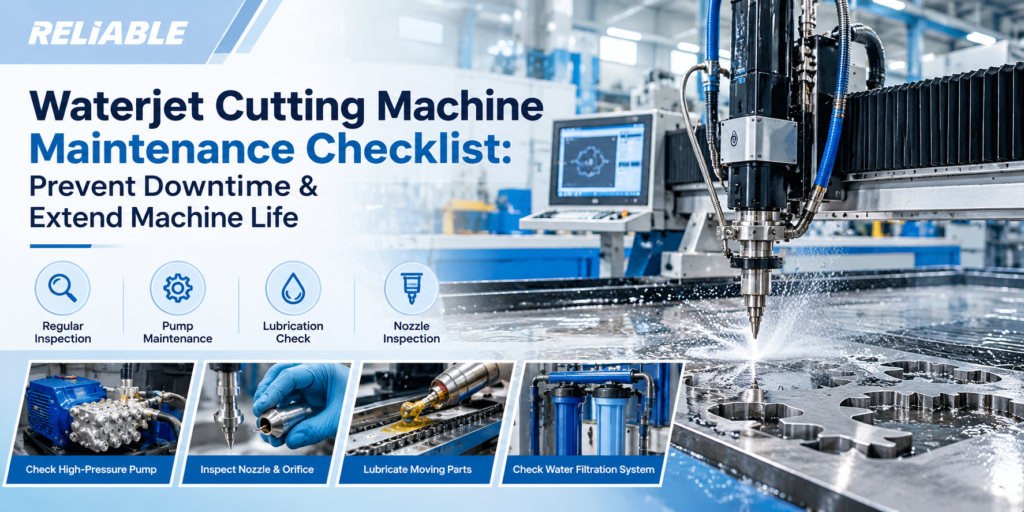
Sometimes production delays start with minor machine problems that are left too long unsolved. Although the nozzle clogging and the pressure instability are small issues, they can have a significant impact on cutting accuracy, material quality, and production speed in the long run. Unplanned downtime is a significant concern for factories that rely on precision cutting on a daily basis, as it can disrupt delivery schedules and increase costs.
The water jet cutting machine is designed for durability and high-performance cutting, but as with all industrial equipment, it needs regular maintenance to operate efficiently. The key benefit of proper servicing is better machine reliability, but there are also the benefits of longer component life and fewer costly repairs.
This maintenance checklist provides an overview of the necessary maintenance tasks that each factory should perform to keep their waterjet cutting machine running smoothly.
1. Inspect the High-Pressure Pump Daily
Every cutting operation starts, and the majority of serious failures occur at the pump. Inspect the weep holes for water leakage every shift – early signs of seal wear are water leakage before seal rupture. Check oil levels in the hydraulic system; low oil will lead to overheating, which will aggravate the situation under high running conditions. Observe any changes in pump noise or vibration when starting the pump. These are early signs that something is going wrong inside the machine and needs to be addressed before it takes the machine offline.
2. Check Nozzles and Orifices Regularly
Cut quality is directly controlled by nozzle and/or orifice condition. A worn orifice will enlarge the stream of water and the enlarged water stream will immediately be apparent in the form of wider kerfs and rough edges on the finished part. Check visually for chips, erosion or blockage in both components at the beginning of each shift. Turn the nozzle 1/4 turn every day to prevent the formation of a tip wear pattern. Change the orifice when the cutting stream is no longer consistent — it is more expensive to wait than to change the orifice.
3. Maintain the Abrasive Delivery System
One of the main causes of poor cut quality in a waterjet cutting machine is an inconsistent supply of abrasive. Fill the hopper before each change of cut — a low hopper fill will cause loss of mixing tube and missing cuts. Check feed lines and metering valves monthly for blockages and/or deterioration. Avoid moisture in garnet, as it will tend to clump together and make the material harder to flow during operation and will cause irregular pressure at the cutting head.
4. Clean the Cutting Table and Tank
Most operators do not realize that abrasive residue, kerf material, and settled garnet accumulate in the catch tank at a faster rate. A tank that is overloaded will cause water circulation to be affected; also, it will decrease the accuracy of cutting close to the table surface and increase undue stress on the drainage system. Remove excess gases from the tank weekly – high-pressure water vapor can accumulate and have to be removed. Clean the tank monthly and empty it completely; check the walls of the tank for corrosion or deterioration at the same time.
5. Monitor CNC System and Electrical Components
Any calibration or electrical error directly affects part accuracy, as the CNC system regulates all the movements your waterjet cutting machine can perform. Clean electrical cabinet fan filters monthly to prevent abrasive dust from reaching sensitive components. Inspect all cables & control panel indicators at the beginning of every shift. Verify that motion axes respond correctly during startup and run a dry test cycle after any maintenance work. Early detection of electrical problems is simple; late detection results in total production stoppages.
6. Schedule Preventive Maintenance
Reactive maintenance is always more expensive than preventive maintenance – in parts, in labor, and in lost production time. Build a formal maintenance log that tracks operating hours alongside calendar intervals. Replace high-pressure seals every 500 – 1,000 hours; change hydraulic oil and filters every 250 – 500 hours; check bearings and the pump annually. Assign clearly specified responsibilities for each task, with operators carrying out daily checks and qualified technicians carrying out the deeper interval-based checks.
Conclusion
Maintenance is not an expense; it’s a surety of the investment that your factory already has. Maintaining a disciplined schedule of daily to annual maintenance allows your waterjet cutting machine to provide precise cuts, at full pressure, for years beyond those a neglected machine could last.
When you need a waterjet cutting machine that will last you a long time, the machine has low maintenance, easy parts and easy technical support, so you should choose Shenyang Reliable Technology. Their machines are designed for high-intensity production and come with a full range of after-sales service and true industry experience.
FAQs
How often should seals be replaced on a waterjet cutting machine?
Usually, the high-pressure seals are replaced every 500 to 1,000 hours. Always follow the manufacturer’s recommended interval rather than waiting for visible leaks.
What causes pressure fluctuation in a waterjet cutting machine?
The most common causes are worn pump seals and clogged water lines. These can be caught in daily inspections and stop the fluctuation reaching the cutting head.
Does water quality really affect waterjet machine performance?
Yes, significantly. Hard water deposits minerals in filters, seals and cutting head. Installation of a water softener or reverse osmosis system will significantly lessen maintenance frequency and component wear.
When should a mixing tube be replaced?
Most mixing tubes last approximately 500 operating hours. A daily check for misalignment and blockage can help to maintain or exceed that lifespan on a consistent basis.
